
A diagnosis of meconium aspiration syndrome (MAS) can be frightening for parents, particularly when their newborn requires breathing support or treatment in a neonatal intensive care unit (NICU). While MAS can develop even when medical teams provide appropriate care, certain cases may involve preventable medical errors during pregnancy, labor, or delivery. Delayed recognition of fetal distress, failure to monitor the baby’s condition, or an unnecessary delay in delivery may contribute to serious complications.
How Can The Pagan Law Firm Help With a Meconium Aspiration Syndrome Case?
If your baby developed MAS, you may have questions about whether the condition could have been prevented and whether medical negligence played a role. At The Pagan Law Firm, we represent families in New York who have suffered because of medical negligence. With more than 30 years of experience handling medical malpractice cases, we can review the circumstances surrounding your child’s birth, help identify potential failures in medical care, and explain your legal options. Call us at 212-967-8202 to discuss your concerns with our team.





What Is Meconium Aspiration Syndrome?
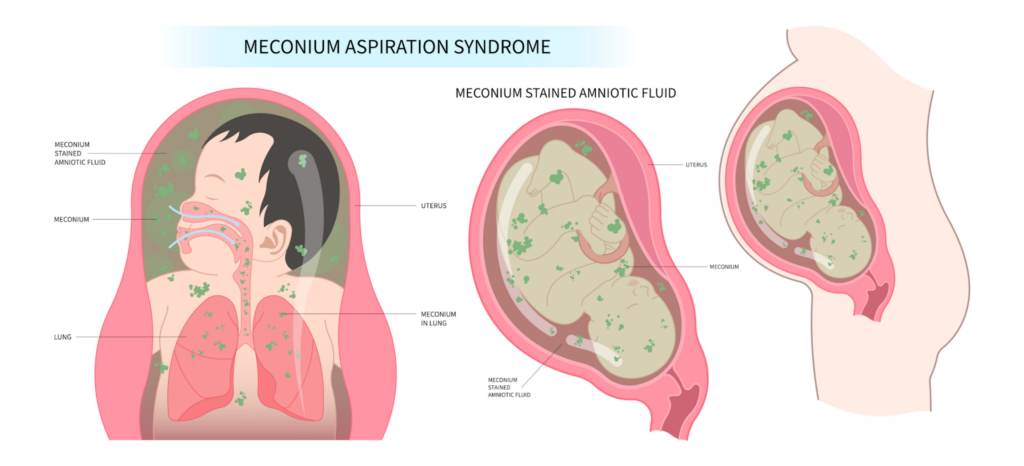
Meconium is a baby’s first stool. It normally passes after birth, but sometimes it passes into the amniotic fluid before or during labor, often when the baby is under stress, such as reduced oxygen. It is more common in full-term and post-term pregnancies.
If the baby breathes in this fluid, either by gasping in the womb or with the first breaths after delivery, the meconium can block the airways, irritate and inflame the lungs, and interfere with surfactant, the substance that keeps the air sacs open. Meconium-stained fluid is seen in roughly 10 to 15 percent of births, and only a small percentage of those babies develop MAS.
Signs of MAS in a newborn include:
- Rapid or labored breathing, grunting, or flaring nostrils
- A bluish skin color (cyanosis)
- Low oxygen levels requiring oxygen or breathing support
- Meconium-stained skin, nails, or umbilical cord, or a limp baby at birth
MAS ranges from mild to life-threatening. Complications can include a collapsed lung (pneumothorax) and persistent pulmonary hypertension of the newborn (PPHN). Severe cases may require mechanical ventilation, surfactant therapy, inhaled nitric oxide, or ECMO (extracorporeal membrane oxygenation) in a neonatal intensive care unit (NICU).
👉Also Read: When You Need a Medical Malpractice Attorney
How MAS Relates to Oxygen Deprivation, HIE, and Cerebral Palsy

Meconium passage is often a sign that the baby experienced fetal distress or oxygen deprivation. When the underlying cause is a period of low oxygen during labor, the baby can also suffer hypoxic-ischemic encephalopathy (HIE), newborn seizures, or other brain injury. Cerebral palsy can result from severe oxygen deprivation around the time of birth.
The lung injury from MAS and the brain injury from oxygen deprivation are separate conditions that can occur together because they may share a cause. MAS does not itself cause cerebral palsy, and not all cerebral palsy is caused by events during labor. Genetic conditions, infections, prematurity, and other prenatal factors can also play a role, which is why independent medical review is essential in every case.
Is Meconium Aspiration Always Medical Malpractice?
No. Meconium can pass in a pregnancy that was managed correctly, and a baby can develop MAS despite appropriate care. Risk factors include post-term pregnancy, placental problems such as placental abruption, umbilical cord problems, maternal high blood pressure or preeclampsia, diabetes, and low amniotic fluid.
To establish medical malpractice in New York, a plaintiff must generally prove two things:
- Departure: the provider departed from accepted medical practice.
- Causation: that departure was a substantial factor in causing the child’s injury.
A bad outcome or a NICU stay does not, by itself, satisfy these elements.
When Can Meconium Aspiration Be the Result of Medical Negligence?
MAS and related birth injuries may involve malpractice when a provider fails to recognize or respond appropriately to warning signs. Examples include:
- Missed or ignored fetal distress. Failing to recognize or act on nonreassuring fetal heart rate patterns, or on meconium-stained fluid, during labor.
- Delayed emergency C-section. Unreasonable delay in performing a C-section when it was clearly indicated.
- Pitocin (oxytocin) mismanagement. Continuing Pitocin despite uterine hyperstimulation and worsening fetal heart tracings.
- Mismanaged labor or post-term pregnancy. Errors in labor induction decisions or in monitoring a protracted (prolonged) labor or a post-term pregnancy.
- Missed maternal conditions. Failing to diagnose or manage conditions that can lead to fetal distress, such as preeclampsia, pregnancy-induced (gestational) diabetes, placenta previa (which can cause severe bleeding), or placental abruption.
- Inadequate newborn resuscitation. Delay in starting breathing support for a baby who is not breathing well, or not having a team trained in neonatal resuscitation available when meconium-stained fluid is present. Newborn resuscitation guidelines have changed over time, and routine tracheal suctioning is no longer recommended for every baby born through meconium-stained fluid. Care is judged against the standards in effect at the time of the birth.
Whether any of these amounts to malpractice depends on the specific records and on whether the failure caused the injury.
How Does a Meconium Aspiration Malpractice Case Work in New York?
- Free consultation. An attorney reviews what happened and the child’s current condition.
- Records collection. The firm gathers prenatal records, fetal heart rate monitoring strips, labor and delivery notes, medication records (such as Pitocin), Apgar scores, umbilical cord blood gas results, delivery room resuscitation records, and NICU records.
- Independent medical review. Qualified physicians, such as obstetricians, neonatologists, and pediatric neurologists, review the records to determine whether the standard of care was met and whether any departure caused the injury.
- Certificate of merit. New York law (CPLR 3012-a) generally requires the attorney to certify that a licensed physician has been consulted and that there is a reasonable basis for the case.
- Filing and discovery. If the case is filed, both sides exchange records and take testimony from the providers and medical witnesses.
- Settlement or trial. Many cases resolve through negotiation with the insurers. Cases that do not settle are decided by a judge or jury.
What Compensation Can You Recover in a New York Meconium Aspiration Syndrome Lawsuit?
New York does not set a statutory cap on compensatory damages in medical malpractice cases. Depending on the facts, compensation may include:
- For the child: Future medical care, therapy and rehabilitation, assistive equipment, pain and suffering, loss of enjoyment of life, and lost future earning capacity.
- For the parents: Medical expenses paid or owed for the child’s care while the child is a minor, and loss of the child’s services. These claims belong to the parents and are subject to the parents’ own filing deadline.
Which expenses belong to the child’s claim and which belong to the parents’ claim depends on the child’s age and the facts of the case, and your attorney will explain how they fit together. No attorney can guarantee a result, and outcomes depend on the evidence in each case.
What Are the Deadlines for Filing a Birth Injury Lawsuit in New York?
New York law sets specific deadlines for filing medical malpractice lawsuits. However, the time limits can differ depending on whether the claim belongs to the injured child, the parents, or involves a public hospital.
- General rule: Most medical malpractice lawsuits must be commenced within two years and six months of the alleged negligent act or omission. If continuous treatment for the same condition applies, the deadline generally runs from the last treatment (CPLR § 214-a).
- The child’s own claim: Under the infancy toll provision, a child’s medical malpractice claim may generally be filed until 10 years after the cause of action accrues. For birth injury cases, this typically means until the child’s 10th birthday (CPLR § 208).
- The parents’ own claims: The infancy toll generally does not extend parents’ derivative claims, including claims for certain medical expenses and other damages resulting from their child’s injury. These claims generally remain subject to the applicable two-year-and-six-month limitation period.
- Public hospitals and municipal facilities: A Notice of Claim is generally required within 90 days after the claim accrues, and a lawsuit typically must be commenced within one year and 90 days. Special rules may apply to injured children, and courts have discretion to permit late notices in certain circumstances. Permission is not guaranteed.
These rules are technical, and missing a deadline can end a claim permanently. Speak with a New York birth injury attorney as soon as possible.
👉Also Read: Legal Consequences of Fetal Growth Restriction Cases Involving Medical Negligence
What to Do If You Suspect Medical Negligence
- Request complete copies of the mother’s prenatal, labor, and delivery records and the baby’s newborn and NICU records.
- Write down your own timeline of labor and delivery while it is fresh: when contractions started, when monitors were placed, when staff were called, and when a C-section was discussed.
- Keep records of all diagnoses, therapies, appointments, and medical expenses.
- Keep up with your child’s follow-up care and developmental checkups, and save the reports.
- Avoid signing releases or hospital paperwork that waives legal rights without getting legal advice.
- Contact an experienced medical malpractice lawyer promptly to protect your deadlines.
👉Also Read: Navigating Legal Avenues: Birth Injury Claims and Infant Seizures
Contact The Pagan Law Firm About Your Child’s Birth Injury Case
For more than 30 years, The Pagan Law Firm has represented injured New Yorkers in medical malpractice and personal injury cases, including birth injuries involving meconium aspiration, fetal distress, failure to perform an emergency C-section, oxygen deprivation, newborn seizures, and cerebral palsy. Our hardworking team gives families an honest assessment of their options. We serve the Bronx, Brooklyn, Queens, Manhattan, Westchester County, and New Jersey.
Call us now at 212-967-8202 or click here for a free case evaluation.
Key Facts
- Meconium aspiration syndrome (MAS) is a breathing problem that occurs when a newborn inhales meconium (the baby’s first stool) mixed with amniotic fluid, before or during birth.
- Meconium-stained amniotic fluid is common and is not, by itself, medical malpractice. A New York malpractice claim requires proof that a provider departed from accepted medical practice and that the departure caused the injury.
- Most New York medical malpractice claims must be filed within two years and six months (CPLR § 214-a). A child’s own claim may have more time under the infancy toll, which is capped at 10 years in medical malpractice cases, but the parents’ own claims generally do not.
- Claims against public hospitals generally require a notice of claim within 90 days, and a lawsuit within one year and 90 days.
- Our New York medical malpractice lawyers at The Pagan Law Firm offer free consultations for families in New York and New Jersey. Call 212-967-8202.
Frequently Asked Questions
Do I have a case if my baby was diagnosed with meconium aspiration syndrome?
Possibly. A diagnosis of MAS alone does not establish malpractice, because MAS can occur even when care was appropriate. You may have a case if a provider departed from accepted medical practice, for example by ignoring signs of fetal distress, delaying a needed C-section, or mishandling newborn resuscitation, and that departure caused harm. An attorney and independent physician reviewers need to examine the medical records to answer this.
How do I know if meconium aspiration was caused by medical malpractice?
The records show it. Reviewers look at the fetal heart rate tracings, how long concerning patterns lasted, what the care team did and when, the decision-to-delivery timeline, and how the baby was resuscitated. If the care fell below accepted standards and that failure contributed to the injury, it may be malpractice. If the complication was unavoidable, it is not.
How long do I have to file a meconium aspiration or birth injury lawsuit in New York?
Most medical malpractice claims must be filed within two years and six months (CPLR § 214-a). A child’s own claim may have additional time under the infancy toll, capped at 10 years in medical malpractice cases. The parents’ own claims generally are not extended. Claims against public hospitals generally require a notice of claim within 90 days and a lawsuit within one year and 90 days. Because these deadlines are strict and technical, contact an attorney as soon as you suspect negligence.
How much does it cost to hire a medical malpractice lawyer in New York?
Medical malpractice attorneys in New York commonly work on a contingency basis, meaning legal fees are paid only if compensation is recovered. Contingency fees in these cases are regulated by statute (Judiciary Law § 474-a). The Pagan Law Firm offers a free consultation, and the firm will explain its fee arrangement before you decide whether to proceed.
How much is a meconium aspiration lawsuit worth?
There is no set amount. New York does not cap compensatory damages in medical malpractice cases, and the value depends on the severity and permanence of the child’s injuries, the cost of lifelong care, the child’s projected future needs, and how strongly the evidence shows negligence and causation. Anyone promising a specific figure before reviewing the records should be treated with caution.
What evidence is needed to prove a meconium aspiration malpractice case?
The key evidence is in the medical records: prenatal records, fetal heart rate monitoring strips, labor and delivery notes, medication records, Apgar scores, umbilical cord blood gas results, resuscitation records, and NICU records. Qualified physicians interpret these records to establish the standard of care, any departure from it, and causation.
Who can be held responsible for meconium aspiration injuries?
Depending on the facts, responsible parties can include the obstetrician, nurses, midwives, the neonatal or resuscitation team, and the hospital. Hospitals may be liable for the negligence of their employees and for system failures such as inadequate staffing or protocols. Liability depends on each provider’s role.
Can I sue if the hospital says meconium aspiration was unavoidable?
Yes, you can still have the case reviewed. A hospital’s position does not decide the question. Independent physician reviewers examine the records to determine whether the injury was unavoidable or the result of a departure from accepted practice.
How long does a meconium aspiration lawsuit take?
Birth injury malpractice cases commonly take several years. The timeline depends on how complex the medical issues are, how long discovery takes, whether the child’s long-term needs are yet clear, and whether the case settles or goes to trial.
Will I have to go to court?
Not necessarily. Many medical malpractice cases settle before trial. If a fair settlement is not offered, your attorney can take the case to trial before a judge and jury. Your attorney will handle the legal process and explain each step.
What should I do first if I think my baby’s injury was preventable?
Request the mother’s and the baby’s medical records, write down your timeline of labor and delivery, keep records of treatment and expenses, avoid signing releases without legal advice, and contact an attorney quickly because of New York’s filing deadlines.
Does the Pagan Law Firm offer a free consultation?
Yes. Call 212-967-8202 or use the free case evaluation link to discuss your family’s situation with a New York medical malpractice attorney.